Lessons from Gideon #4

Our summer Bible study on Gideon by Priscilla Shirer ended last week. I’ve previously written some of the “Lessons from Gideon” that I’ve taken away from this study here:

As we conclude, I wanted to gather some final thoughts.

Gideon became the valiant warrior God called him to be. We see early in the study in Judges 6 and 7 how he and the 300 men chosen by God routed the enemy in God’s strength alone. We see how Gideon was in conversation with God, in communion with Him during this time, even if it was just receiving assurance or confirmation of the plan. God was patient with Gideon, and Gideon obeyed God and believed Him.

Yet as the story nears the end, we don’t see Gideon talking with the LORD anymore. I suppose it could mean that it just wasn’t recorded, but we also see in his actions that he may have started to do what the Israelites were so famous for doing — what was right in their own eyes, but evil in the sight of the Lord (Judges 2:11, 3:7, 3:12, 4:1, 6:1).

It’s not conclusively clear, but we see things such as:

A.  When the Israelites asked Gideon to rule over them because he had delivered them from the hand of Midian (Judges 8:22), though Gideon refused to rule over them (Judges 8:23), he did not give the credit to the LORD for defeating the Midianites.

Though this may seem subtle, it’s important. The very reason the LORD had reduced the number of men who would do battle to only 300 (from 32,000) was so that Israel might not become boastful, saying their own power had delivered them (Judges 7:2-3).

B.  Following that exchange, Gideon asked the Israelites to each give him an earring from the spoil (Judges 8:24). With this collection, Gideon made an ephod and “placed it in his city, Ophrah, and all Israel played the harlot with it there, so that it became a snare to Gideon and his household” (Judges 8:25-27).

An ephod was a specially designed garment for the priests to wear, intended to give them God’s guidance and instruction. Shiloh (35 miles from Ophrah) was the designated religious center for the people. So Gideon had set up in his city something intended for the priest at Shiloh. Perhaps this was for convenience, something he thought might be good, but it led to devastating consequences as it became a snare to the people.

Though Gideon previously, at the LORD’s instruction, had taken down the altar of Baal that belonged to his father, and the Asherah beside it, and built an altar to the LORD (Judges 6:25-28), it’s as though he has forgotten that they were not to worship other gods or make for themselves something that would be an idol. Could the story of Aaron making the golden calf (Exodus 32), collecting gold and earrings to make a “god” to worship, have been so far removed from his mind? It’s as though history repeats itself, and it is perhaps a picture of generational sin that will continue time and again unless we are in relationship with God, following Him, and allowing Him to break strongholds.

C.  In Judges 8:30-31, we see Gideon had many wives and 70 sons. He named his son, born to him by his concubine, Abimelech, which means “my Father, a king,” perhaps indicating how Gideon saw himself, even if he had refused to be ruler.

Priscilla outlines other things in the week previous to this last one where we first see Gideon perhaps begin to move away from God: taking vengeance on the men at Succoth, anger and violence at Penuel, and disgracing the Midianite kings (Judges 8:15-21). Though we can’t conclusively say this wasn’t what God wanted Gideon to do, we do see that Gideon doesn’t seem to be communicating with God as before and seems to be led by his passion and desire for vengeance. Priscilla describes these things as a domino effect, and it ultimately then seems to lead to taking credit for what God had done, the building of the ephod, many wives, and more.

In the end, as soon as Gideon died, “the sons of Israel again played the harlot with the Baals, and made Baal-berith their god. Thus the sons of Israel did not remember the LORD their God, who had delivered them from the hands of all their enemies on every side; nor did they show kindness to the household of Jerubbaal (that is, Gideon), in accord with all the good that he had done to Israel” (Judges 8:33-35).

It’s a sad ending.

We thought about what our idols might be, how we might be on a slippery slope headed in a way that doesn’t please God, sometimes without even realizing it. It’s so vital that we stay in God’s Word and in prayer, asking Him to reveal these things to us.

Even as I type this morning, I do so on a new computer that arrived yesterday evening. I prayed about whether we should make this purchase, concerned that what starts out good could become a snare to us. I prayed this morning to ask God to make this of use for His glory and to be of good. But I do see how easily these things can become other than what they were originally intended. So we must remain watchful, prayerful, seeking the Lord, reading His Word, following His Spirit’s leading, hearing His voice, obeying Him.

I’ve loved this summer study. I’ve loved the focus it’s given me on my home as my first calling before I move out to other things. I’m thankful for a slow summer with time off work to be able to build on some of these things God has revealed. I’m thankful for the cautions God puts before us as we see how Gideon’s life ended. I’m thankful that we have a God who is strong and who gives us His strength in our weakness. And I pray that we who studied together will continue to walk in God’s way, knowing Him more, and doing what pleases Him.

Progress, Not Perfection

This summer has provided more free time than I can ever remember, and it’s been a wonderful blessing. I’ve been able to make progress in several ways.

  • We’ve been eating better — more eating at home, less eating out.
  • I’ve been exercising, trying to walk every other day.
  • I’ve been enjoying time reading and updating the blog, writing a little more here or just in my journal.
  • Along with my mom, we’ve hosted a summer Bible study and daily benefited from studying the life of Gideon (Judges 6-8) together with a group of women of all ages.
  • I’ve been working less and doing a lot to prepare for a busy fall when school begins later this month.
  • We’ve taken care of dental visits and well checks for the kids.
  • We’ve started college visits!
  • We’ve done some traveling, seen extended family, and celebrated the life of my beloved uncle who went to be with the Lord.
  • We also celebrated birthdays and life in meaningful ways.

All in all, it’s been not only a good summer, but one in which I can see progress. You know the defeating saying, “two steps forward, three steps back”? I feel like for us, it’s been “three steps forward, two steps back” or some variation on that where we’ve moved forward and made progress, not perfectly, sometimes going back a little, but then surging ahead again. For this, I am thankful.

The ongoing process of sanctification (our ongoing growth in the Lord, being set apart for His use) is a good one, where the Lord is continuing His good work in us until its completion at the day of Christ Jesus (Philippians 1:6).

But it’s sometimes also a hard process! It seems to require our active participation, that we continue to work out our salvation with fear and trembling, trusting and waiting on God to do all that He has planned (Philippians 2:12-13). We don’t trust in the seen, but the unseen. We hope in God, resting in His promises revealed to us in His Word.  Sometimes we must wait to see how it will all work itself out.

So we trust Him, walk by faith, without sight, hoping and waiting in confident expectation that God will act on our behalf and finish the good work.

All of this, this sanctification is ongoing. We won’t be perfect here on earth, but we can make progress. And I am filled with hope that God will finish what He has started, and I look to him and find Him near on the journey as we walk by faith.

Speak Up

Psalm 39:2: “I was mute and silent, I refrained even from good, And my sorrow grew worse.”

Keeping Quiet

We’ve probably all heard there are some things we shouldn’t talk about in polite company, including religion and politics. We’ve all been around (or maybe even been at times!) people who are rash, argumentative, and offensive with their thoughts and opinions. So this rule of etiquette helps keep conversations polite and respects the thoughts and opinions of others who may differ.

Particularly now in our world of social media, it’s very easy for people to “tweet” their minds, and everyone can have a voice. We witness people disagreeing in sometimes ugly, even slanderous ways. It makes me wonder if in our society we are losing, to some extent, the ability to engage thoughtfully and logically, to think and discuss ideas, to value the dialogue and hear and consider other sides, without attacking the person who holds to a different way of thinking.

It’s for these reasons that I find myself rarely ever speaking publicly about many things that really matter — because undoubtedly, some will disagree. If I am silent, I don’t risk accidentally offending someone or being misunderstood. And rather than becoming engaged in the clamor of voices, opening myself up to attack or risking offense, it’s easier just to be quiet.

But I’m wondering — in keeping silent, have I kept the peace, but ceased to do good? Has my silence about most anything that matters been a way of giving up ground? Since I won’t speak of it, does it cause me to ignore it, thereby giving me less reason to do good for it (whatever this truth or value is)?

And if we adhere to respectfully being quiet, those with false and even harmful ideas push them forward. And when wrong ideas aren’t met with truth, the voices of error or harm will become the ones that are most heard and have the potential then to become the ones that are believed.

Edmund Burke said, “The only thing necessary for the triumph of evil is for good men to do nothing.” In keeping silent, we do nothing. And in our silence, it’s possible we might cease to do good.

A Case in Point

You have likely seen the Planned Parenthood story and videos about selling aborted baby parts for profit (or perhaps even intact babies, we are now coming to learn). This has caused many of us who might have previously become dull to the horrors of abortion itself, or even some who have previously defended abortion, to be shocked and enraged.

It’s a key time to step back and take a look again at what abortion really is. Should we not all have been enraged before when a baby was mercilessly killed under the cover of the womb? Perhaps because it was a dark, hidden place — not visible — people have not reacted to what would have horrified them if it were happening in an open, light place before the eyes of many.

And isn’t that a picture of how sin works and the enemy acts — in the darkness. But when the light shines in, as is happening now, the truth is clearly seen.

And in this case, it has reached a different level in our consciences, many of which have heretofore been numbed by the sheer magnitude of the problem, the law, the difficulty of challenging such a big organization, and the uncertainty about what we could do.

But people are now rising up, at first because it has become known the body parts are being sold for profit, but now even more because we all are realizing the extent of how these abortions are actually being performed.

Senior Bible Class

In my high school, we studied abortion as part of our senior Bible class. I have to admit that going into that class as a 17-year old, I had heard the word “abortion” and was told it was wrong, but a part of me wondered if it really was that big of a deal. Wasn’t this just a tiny little thing in its earliest stages that wouldn’t hurt? And didn’t “choice” sound like a really good thing?

But what happens when you study something is you begin to learn the facts, the truth, and then that inescapable truth informs you and drives you to believe differently than you would have without the truth.

We watched a video of an abortion. We learned how the baby develops in the womb and when the baby likely begins to feel pain. We heard from a counselor whose expertise was in helping women who had had abortions, and we even listened to a recording of a woman in severe grief over her abortion. We learned that this wasn’t just an exception; it was more the rule. We realized that the women having abortions were just as much victims as the babies, being told lies; in fact, an abortion can be dangerous to a woman’s health. It might even be possible that the women most defending abortion have experienced one themselves, such that defending it somehow eases the pain, reassuring them that if it’s legal, can it really be wrong?

This class was not only very convincing, but as Christians, we believe life begins at conception and that all people are made in the image of God and have value before Him. We know Psalm 139 is true – that we are fearfully and wonderfully made and that God knew us before we were skillfully wrought in the depths of the earth.

During Senior Bible, we learned truth and knew where we stood on this issue long before we might ever face a decision about it.

Premature Birth

Years later, the day did come for me when I thought again about abortion and those who grapple with the decision. I faced an extremely rare and life-threatening pregnancy. Though abortion was never a consideration or suggested by my doctors, it did cause me to wonder what other women in a life-threatening situation would do. The perinatologist told me he would do his best to save my life first and the life of my baby. I remember saying to consider my baby and me as equal, but the reality is they would save the mother’s life first. I told him then to save us both.

What I knew about life had been shaped through my Bible class. But what I also knew as a mother was that I wanted this baby to have life, even if it should cost me my own. Her value in my mind was the same as mine — made in the image of God. Would the fact that I had lived longer – 30 years or so at the time – give me more value than her and what God might do through her in her lifetime?

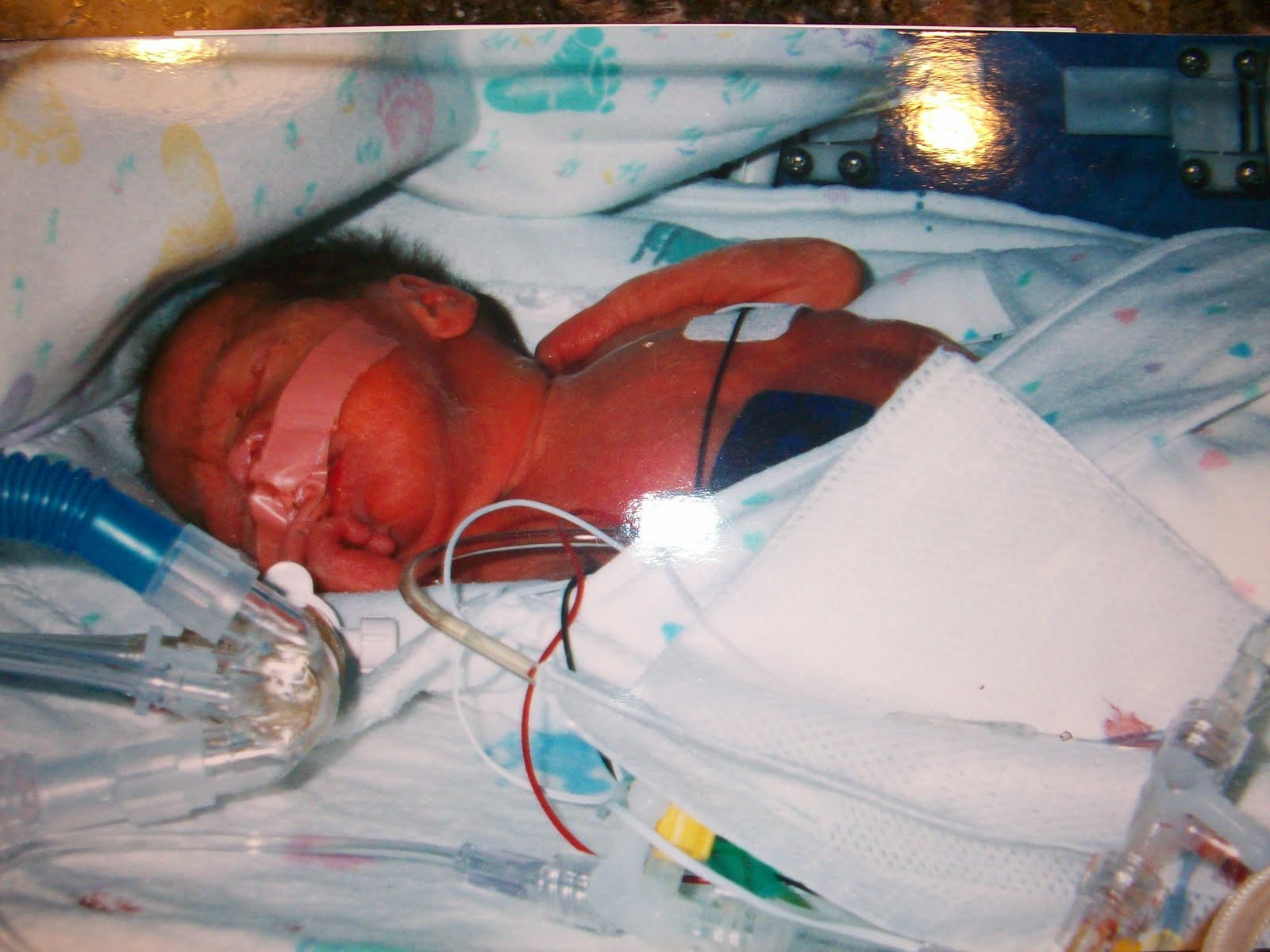
Thankfully it didn’t come to that point. After a tumultuous pregnancy and a month-long hospital stay, she was delivered at the end of the second trimester, at 27 weeks, 2 pounds, 3 ounces. I remember looking at her in the Neonatal Intensive Care Unit and being struck with the reality that if someone came in there and tried to dismember and kill her, we would all cry out! But if she were still under the cover of the womb, it would be permissible. How can this be?

Here’s a 27 week baby, perfectly formed, human as you and me, different only by time and growth. She turned 15 this week, a beautiful and healthy girl.

3d53e-014325d3-015

A Voice for the Voiceless

So what can we do? Today, it’s easy to know where to begin. We can contact Congress to urge our representatives to support S.1881: Bill to Defund Planned Parenthood.

We can pray. Don’t you wonder whose prayers are being answered even now?

Pray for the women who have had abortions who might be struggling with regret or grief. Pray for the people involved in this industry to be convicted of this and to see it from a new and right perspective. Pray for those in our government who will vote and make decisions on this issue. Pray for our own hearts to be led with wisdom by God to do what He would call us to do — love others, tell the truth in love for the good of another, give and support pro-life causes, and be a voice for the voiceless.

There are many other issues in our culture today besides abortion where we might need to lift our voices. And that will start in prayer.

Our Only Hope

In this and in all things, we have one hope. His name is Jesus. We do indeed live in a world broken by sin, and all things will not be made right until heaven. But He is a God of abundant, plentiful, and full redemption. For the one broken in pain, loss, and guilt over sin, there is forgiveness through Christ. His death on a cross and His resurrection from the dead offers us forgiveness through faith in Him. He who knew no sin became sin for us. All of Scripture tells us this story. We can be set free from sin to live with Him and for Him with joy.

Jesus is the One who stooped in humility, even to the point of death, to reach us, those who are weak and needy. And when we experience His grace, we will follow His example to truly love and protect the weak and needy around us, and to lead others to Christ who will give them abundant life both here and for all eternity.

It might mean that we will need to open our mouths to tell this good news, to speak the truth in love, to proclaim the praises of Him who called us out of darkness and into His marvelous light. And in opening our mouths, we might be led to do good, to seek His good in this world, to be a light reflecting the true Light who came into the world for our sake.

Lessons from Gideon #3

GideonThis summer I’ve been tracking here some of the things we’ve been learning in our summer Bible study on Gideon. Priscilla Shirer, the author of the study, suggested using social media and the hashtag #lessonsfromGideon to do this. My “Lessons from Gideon” #1 and #2 are here and here.

At the end of the “Lessons from Gideon #1” after offering 6 lessons at the midway point of our study, it seemed like I should close that entry with some kind of concluding point, which as I thought about it was this: “7. God seems to be patient with Gideon as he makes him the mighty warrior that He called him to be.”

In fact, though I didn’t know it then, the patience of God was the theme for the next video session and the start of our Week 4 lessons. We discussed it last night.

One friend pointed out how amazing it was that the angel of the LORD would wait for Gideon while Gideon went to prepare his offering.

We saw how God was patient with Gideon as he questioned the angel of the LORD, then as he laid out his fleece twice, and as God Himself offered for Gideon to go down to the enemy camp to receive encouragement and confirmation before the battle. God is a God of patience.

That God should wait for us! How incredible is this?! If we have the notion of a God who is removed or uncaring, we need to think again. He is patient toward us to draw us to Himself, to salvation.

As I reflected more on this, it reminded me of this post on “The Patience of God” from Christmas 2013.

One other highlight from last night’s study: As we looked at Gideon’s assistant Purah who went with him into the enemy camp — perhaps so that if Gideon were to forget what he heard, Purah could remind him and help strengthen Gideon — we talked about our own friendships like Purah and how we can encourage one another and help hold each other accountable in various ways as we pursue God’s call.

At the end of the study, it seemed like we were all offering encouragement to one another, not necessarily completely intentionally, but as an overflow from our discussion. How beautiful it was to speak words of encouragement to friends, to come alongside them in their journey and say, “I see God in you through _____” or “I love the way God uses you to _____” etc. and to hear it back, “You are gifted in _______” etc.

One woman said something to me that I had never thought about in quite that way, though when she said it, I could remember immediately something even from childhood that evidenced it was true. But I’d never seen it as a gift, and in fact, recently had begun to diminish the whole idea of using it. To have it re-identified as a gift and consider how God might use it was something unexpected, but that sparked all sorts of ideas.

So these conversations allowed us to offer encouragement, receive encouragement, support one another in our giftings, and spark a little flame inside of what God could use, maybe something we’d long forgotten about or never known. I think we all left excited to look for ways to encourage others this week in things we see God doing in their lives.

I loved how Priscilla ended the video mentioning two parts — the part we do, but much bigger than that, the part God does. We cooperate in what He is doing, and He gives us His strength and the power of His Spirit to accomplish it for His glory. It is exciting to see what He is doing and be a part of His work in the world. (Ephesians 2:10)

Again, I only capture a few points here, but this is an excellent study. I continue to be grateful for it, for the women God has brought together this summer, and the enriching discussion we have each week centered around God’s Word.

Lessons from Gideon #2

It’s the early still of the morning, the best part of the day. The house is quiet. Through my den’s East-facing window, I see again the mercies of God as the sun rises on a new day, pointing me to the true Sunrise from on high.

This year I’ve been trying to give God the firstfruits of my day. Spending time in prayer and God’s Word in the day’s first moments has anchored me for the day ahead; given me time to express again my praise and trust in God and my need for greater faith; convicted me of sin; guided me in my path as I bring my requests before Him; given me peace and a time to thank Him; and blessed me in many unexpected ways.

But isn’t that always the case when we approach God in faith through Christ? In worshiping and surrendering to the One who created us and knows us and first gave to us — the One who did not spare His own Son so that we could be saved from our sins — we find our true identity, what we were made for, and are strengthened in Him for another day.

I shared last time some of the lessons from Gideon I’ve been taking away from my summer Bible study. Here are a few more:

Priscilla Shirer pointed out in the first session that Gideon was part of a nation that had stopped moving forward, how in this study we might find a “divine green light” on somewhere God might be calling us, and we can move forward in His strength.

As we’ve moved along in the study considering what God might be calling us to by looking at Gideon, Priscilla has pointed out that we have spheres of influence, and we must start in the circle nearest to us. So picture a target with a center bull’s-eye and the circles working outward. These are our spheres of influence.

Though Gideon was being called by God to deliver Israel from the Midianites’ oppression (Judges 6:14), Gideon’s work would began in the circles closest to him. He first had to pull down the altar of Baal that belonged to his father and cut down the Asherah (wooden symbol of a female deity, my Bible says) beside it (Judges 6:25). Then he was ready to move outward to another sphere.

“The journey of fulfilling our divine purpose will almost always follow this same pattern,” Priscilla writes.

She also notes, “Choosing to do our primary work in the smaller, less noticeable spheres and devote our best gifts there is often a foreign thought to us. We usually want to jump from the center directly to the perimeter of impact, skipping over the areas most closely connected to us. The result? A life and calling that eventually implode, caving in upon their shoddy, unstable structure.”

This resonated with me. It’s so easy to want to jump to something that looks bigger, to move outward to what might give me more gratification, without stopping to look inward or to focus on my first calling in the home. That is more invisible and often harder, with perhaps less immediate results, so it’s easy not to be as intentional with those central and foremost callings from God.

If we are married and have children, our husband and children are a natural calling not to be overlooked for something more. We won’t have to step on them to fulfill some other ministry. Other callings will enhance and be unified with those first ones.

I think this is so hard for Christian women today. We are being encouraged (in pure and good ways) to be dreaming, considering our passions and desires and how they can be used, taking new territory, moving to a next greater step, willing to give it all to go to something big and unknown. If we aren’t careful, though, we can begin to look to those things to fulfill us, rather than bring glory to God, and these things can cause us to shortchange the most central callings God has given us right in our home. What God calls us to will not be at the expense of our husband and children; it will be in conjunction and in harmony with our homes and family.

Priscilla writes, “These innermost circles are often the ones that offer the least amount of recognition. This is why so many people try to circumvent them. And yet your greatest impact will be done here — in the ordinary rhythms of your daily living.”

So I’m challenged not to look past the inner circles. In my life, I suppose it would look like this (I list church because I work there).

my spheres of influence

So while I began this study wondering or even hoping for some greater call on my life to emerge, the one that has settled in my heart is first and foremost in my home. I’ve become convinced that these calls don’t become separate, individual, and distinct, but work together in a way that will hopefully please God and bring Him glory. (These are lessons, though, I’ve been having to learn over the last 10 years!)

I’m thankful for a God who loves us, who calls us to Himself, who forgives us, who is merciful and patient with us, who gives us our identity in Him, and who does have purposes for us to accomplish in the world. May we seek Him for what that looks like so that we will neither move forward where He hasn’t led or shrink back in fear from what He is indeed calling us to.

Help us, Lord, as we work from the center out, to find ourselves in the center of Your will. Amen.